
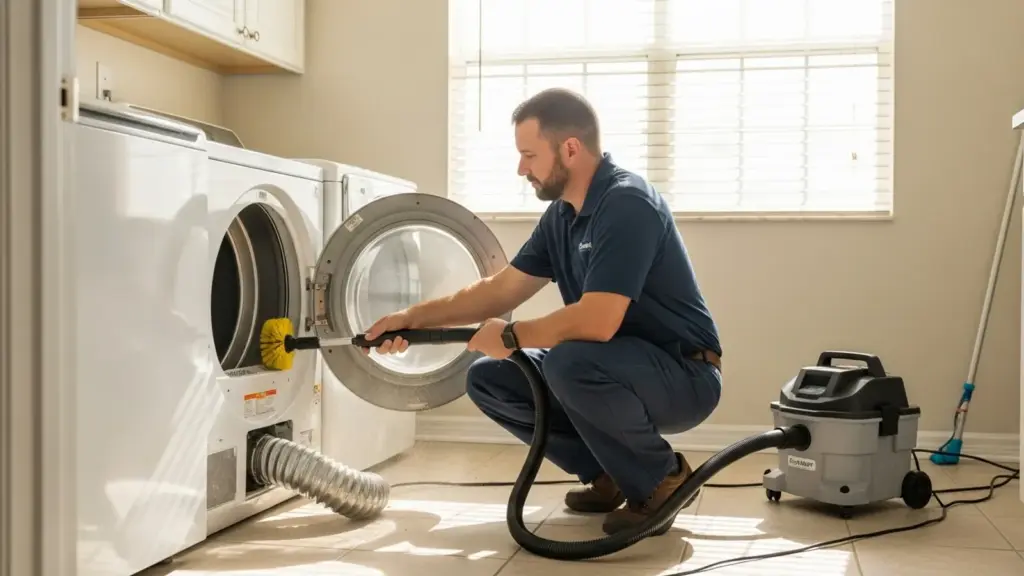
What Factors Determine Dryer Vent Cleaning Costs in West Florida?
You pull a load of towels from the dryer and they’re still damp after a full cycle. You run it again, and this time the laundry room feels warmer than usual. If that scenario sounds familiar in your New Port Richey home, a clogged dryer vent is a likely culprit, and getting it cleaned is the right call. But once you start looking into service, a reasonable question follows: why does the cost vary so much from one job to the next?
The answer isn’t arbitrary. Several concrete, measurable variables determine what a dryer duct cleaning job actually involves, and understanding them helps you evaluate any quote with confidence. This guide walks through each factor step by step, with specific attention to conditions common in the West Florida Gulf Coast area, where humidity, home construction styles, and pest activity create a distinct set of challenges. For a full picture of what happens during the appointment itself, see our guide on professional dryer vent cleaning in New Port Richey.
Before You Start: What to Have Ready
- The approximate location of your dryer (interior laundry room, garage, second floor, etc.)
- Knowledge of where the vent terminates outside the home (side wall, roof, soffit)
- Any history of pest activity near the vent termination cap
- The last time the vent was professionally cleaned, if known
- Whether you have a gas or electric dryer (relevant for safety checks)
- The type of duct material, if you know it (flexible foil, rigid metal, semi-rigid aluminum)
Having this information on hand before you call a technician lets the conversation move faster and gives you a clearer sense of what the job will involve before anyone arrives at your door.
Step 1: Understand How Vent Run Length Affects the Job
The single most consistent variable in dryer vent cleaning is the length of the duct run from the back of the dryer to the exterior termination point. A short, straight run through an exterior wall in a single-story New Port Richey ranch home is a straightforward job. A duct that snakes through a wall cavity, turns through a chase, runs horizontally across an attic, and exits through the roof is a significantly more involved one.
Longer runs accumulate more lint across a greater surface area. They also require more rotary brush passes and more time to confirm the duct is fully clear. Every elbow or bend in the run adds resistance, which is both a fire and efficiency concern, and each one adds complexity to the cleaning process. When a technician measures or traces a run before quoting, they’re not being overly cautious; they’re doing the math on what the job actually requires.
Step 2: Factor In the Termination Point Location
Where the vent exits the building matters as much as how far it travels. Side-wall terminations, where the duct exits through an exterior wall close to ground level, are the easiest to access and inspect. Soffit terminations are more involved. Roof terminations, where the duct exits through the roof deck and terminates at a cap above the roofline, require working at height and often involve additional equipment.
In West Florida, roof terminations are more common than in many other regions because single-story slab homes often have limited exterior wall space near the laundry area, and builders route the duct upward instead. The added complexity of a roof termination, including safely accessing it, removing a potentially corroded or clogged cap, and cleaning from above, is a real labor and equipment factor that a thorough technician will account for honestly.
If you want it handled correctly the first time, consider professional breathe easy with professional dryer vent cleaning in New Port Richey.
Step 3: Account for Duct Material and Condition
Not all dryer ducts are built the same. Rigid metal ductwork, typically galvanized steel or aluminum, is the preferred material from a safety and airflow standpoint, and it’s also the easiest to clean thoroughly with rotary equipment. Semi-rigid aluminum, which is common in newer construction and renovation work, cleans well but requires care to avoid kinking. Flexible foil or plastic duct, which was widely used in older Florida homes before building codes tightened, poses the greatest challenge: it accumulates lint in its accordion-like ridges and can tear if handled aggressively.
If a technician finds that flexible plastic duct is still in place, they may note that the material itself is a code concern in many jurisdictions. Requirements vary by municipality, so always check with your local building department or a licensed professional before making decisions about replacement. The condition of the duct, whether it has disconnected sections, crushed areas, or visible deterioration, also affects how much time and care the cleaning requires.
Step 4: Consider Florida’s Humidity and Its Effect on Lint Buildup
This is the factor that sets West Florida apart from most of the country. New Port Richey sits in one of the most humid coastal corridors in the continental United States. The combination of high ambient humidity, warm temperatures year-round, and the moisture that dryers naturally exhaust creates conditions where lint inside duct walls doesn’t just accumulate, it compacts. Wet lint is denser, stickier, and harder to dislodge than the dry, fluffy lint most people picture.
Homes near the Gulf, including much of Pasco County’s coastal communities, experience this effect more acutely than inland properties. A duct that would require a single cleaning pass in a drier climate may need multiple passes and more aggressive brush work here. This is not a service shortcut issue; it’s a regional physical reality. For a deeper look at how Gulf Coast humidity specifically accelerates lint accumulation, read our breakdown of humidity’s effect on dryer vent lint.
Step 5: Check for Bird Nests, Wasp Nests, or Pest Blockages
In New Port Richey and across Pasco County, dryer vent termination caps are a well-known nesting target for birds, particularly house sparrows and starlings, as well as paper wasps and mud daubers. A nest inside or just behind the termination cap does several things at once: it blocks airflow, holds moisture, and creates a fire hazard when lint accumulates around nesting material.
Removing a nest is a separate task from standard lint cleaning. It requires clearing the blockage, sanitizing the area if bird droppings are present, and often replacing the termination cap with a pest-resistant model. Some caps have deteriorated flaps that no longer close when the dryer isn’t running, making re-infestation likely unless the cap is replaced. A technician who finds a nest mid-job will typically walk you through the situation before proceeding, since the scope has expanded beyond a routine cleaning.
Step 6: Evaluate the Time Since the Last Cleaning
A vent that was last cleaned within a reasonable interval, generally within the past year for average household use, requires a maintenance-level effort. One that hasn’t been touched in several years, or that the homeowner has never had cleaned since moving in, is a different job. Years of compressed lint, potential moisture damage, and possible partial blockages mean the technician is doing restoration work as much as maintenance.
Many New Port Richey homeowners rely on expert breathe easy with professional dryer vent cleaning in New Port Richey for exactly this.
If you’ve recently purchased a home in New Port Richey or the surrounding area and don’t have records of prior dryer vent service, it’s reasonable to assume the job will be more involved than a routine annual cleaning. Older Florida homes, particularly those built in the 1980s and 1990s that may still have original ductwork, often fall into this category. The warning signs of a clogged dryer vent can help you gauge how urgent the situation may be before you call.
Step 7: Understand What a Thorough Cleaning Prevents
One of the most practical ways to think about dryer vent cleaning costs is to weigh them against what a neglected vent costs over time. A dryer working against a restricted vent runs longer cycles to dry the same load, which adds to your electricity or gas bill every month. Bearings, heating elements, and thermal fuses in the dryer itself wear faster under the strain of extended run times. In more serious cases, lint accumulation inside the duct creates fire risk, and the damage from a dryer-related fire is a cost in an entirely different category.
A thorough cleaning, done correctly the first time, reduces the likelihood of needing a repeat service call in the near term. Cutting corners during a cleaning, such as using a basic brush kit without proper vacuum containment or skipping a full airflow test at the end, can leave residual lint that compacts quickly and brings the vent back to a problematic state sooner than it should. This is one reason that understanding what goes into a quality service is worth your time before you book. For a full walkthrough of the service process, see what a professional dryer vent cleaning in New Port Richey actually involves.
Step 8: Ask the Right Questions Before You Book
Once you understand the variables, you’re in a much better position to have a productive conversation with any service provider. A few things worth clarifying before scheduling:
- Does the quote include access to a roof termination if that’s where your vent exits?
- Is pest nest removal included, or is it quoted separately if discovered?
- Will an airflow test or visual inspection be performed after cleaning to confirm the duct is clear?
- What happens if the technician finds a disconnected or damaged section during the job?
- Does the service include replacing the termination cap if the existing one is damaged or non-compliant?
These aren’t gotcha questions; they’re the kind of practical details that separate a thorough job from a surface-level one. For a complete list of what to ask before you commit, our guide to questions for your dryer vent cleaner covers the full checklist.
When to Call a Professional in New Port Richey
Some homeowners attempt basic dryer vent maintenance themselves, and for very short, accessible runs, clearing the lint trap housing and vacuuming the first few inches of duct is reasonable upkeep. But the full duct run, especially one that involves roof access, multiple elbows, compacted lint, or any sign of pest activity, is work for a licensed professional with the right rotary equipment and vacuum containment.
Ready for the next step? Learn how breathe easy with professional dryer vent cleaning services in New Port Richey can help and reach out to the team.
In New Port Richey specifically, the combination of humid air, aging housing stock, and frequent pest pressure means that what looks like a simple job from the outside often has complications once a technician gets into the duct. Attempting to clear a compacted or nested vent without proper equipment can push debris further into the run, damage flexible duct material, or dislodge a connection that was already marginal. If your dryer is taking more than one cycle to dry a normal load, if the exterior vent flap isn’t moving when the dryer runs, or if the laundry area feels unusually warm during operation, those are signals to schedule professional service rather than attempt a DIY fix.
Frequently Asked Questions
Does a longer duct run always mean a higher service cost?
Generally, yes, because longer runs require more time, more brush passes, and more effort to confirm the duct is fully clear. However, a short run with a roof termination or significant pest blockage can be just as involved as a longer straightforward run. The total complexity of the job, not just the footage, is what drives the scope of work.
Why does humidity in West Florida affect how often I need dryer vent cleaning?
High ambient humidity causes lint inside the duct to absorb moisture from the exhaust air and from the surrounding environment, making it denser and more adhesive than dry lint. This compacted lint restricts airflow faster than it would in a drier climate, which is why New Port Richey homeowners often benefit from more frequent cleaning intervals than the national general guidance suggests.
Is replacing a damaged termination cap part of a standard cleaning service?
It depends on the provider and what they find during the job. Some technicians carry standard replacement caps and include the swap as part of the service when the existing cap is damaged or pest-compromised. Others quote it separately. It’s worth asking before the appointment so you’re not surprised if the cap needs to go.
How do I know if the cleaning was thorough?
A reliable indicator is an airflow test at the end of the job. A technician who measures airflow at the termination point before and after the cleaning can show you a concrete improvement. Visually, the exterior flap should open freely and consistently when the dryer runs. If the dryer is still running long cycles after a cleaning, that’s a signal to follow up.
Can I reduce future cleaning costs by changing anything about how I use the dryer?
Cleaning the lint trap before every load is the single most effective habit, since it reduces the amount of lint that enters the duct in the first place. Using the dryer’s moisture sensor setting rather than a timed cycle also helps, as it stops the dryer when clothes are actually dry rather than running unnecessarily. Neither habit eliminates the need for periodic professional duct cleaning, but both can extend the interval between services.
The Bottom Line on Dryer Vent Cleaning Costs in West Florida
The variables that affect what a dryer vent cleaning job involves, duct length, termination location, material condition, humidity-compacted lint, and pest blockages, are all real, measurable factors specific to the job at hand. In New Port Richey and the surrounding Pasco County communities, several of these factors, particularly Gulf Coast humidity and pest pressure, tend to make jobs more involved than the national average.
Understanding those variables puts you in a better position to evaluate any quote and to ask the right questions before work begins. A thorough job done correctly is an investment that pays back in dryer efficiency, reduced wear on the appliance, and a lower risk of the kinds of problems that a neglected vent can cause over time. Ready to schedule a cleaning or get a clearer picture of what your specific setup involves? Contact our New Port Richey dryer vent cleaning team to talk through the details.