
5 Warning Signs of Dryer Vent Lint Buildup in Your New Port Richey Home
How do I know if my dryer vent is clogged? If you notice your clothes taking two or three cycles to dry, or if the top of the machine feels burning hot to the touch, your dryer exhaust line is likely choked with packed lint. In our coastal New Port Richey service area, this common household issue quickly escalates from a daily chore annoyance to a serious household safety hazard. Identifying these warning signs early helps you maintain a safe, efficient laundry routine.
The Story of a Restless Dryer in New Port Richey
Imagine a typical Saturday morning in a quiet neighborhood near the Cotee River. A local homeowner loads a weekly batch of beach towels and cotton shirts into the dryer, expecting a standard forty-five minute cycle. Two hours later, the towels are still damp, smelling faintly of sour moisture, and the laundry room feels like a sauna. The dryer itself is radiating heat, its metal exterior almost too hot to touch.
This is not a mechanical failure of the heating element or the motor. Instead, it is the classic footprint of severe dryer vent lint buildup. In coastal Pasco County, our humid air mixes with loose clothing fibers, creating a heavy, paste-like debris that clings to the ribbed interior walls of the exhaust duct. When the moist exhaust air cannot escape, the entire appliance works twice as hard, wasting energy and steadily increasing the internal temperature of the cabinet. Let us look closely at why this happens and how to spot the five most common signs before they lead to an emergency.
1. Clothes Taking Multiple Cycles to Dry
The primary job of your dryer is to extract moisture from wet fabrics and vent that damp air safely out of your home. To do this efficiently, the system requires a continuous, high-volume flow of air. When lint begins to coat the interior walls of your exhaust line, the pathway narrows, restricting the volume of air that can pass through.
Without adequate airflow, the wet, humid air is trapped inside the drum. The machine simply spins the clothes through the same damp atmosphere over and over again. If you find yourself resetting the timer for a second or third run, even for light loads like activewear or sheets, the restricted airflow is the prime suspect. This symptom is often the first visible warning that you are overdue for a thorough dryer vent cleaning new port richey service.
2. The Appliance and Clothes Feel Exceptionally Hot
Have you ever opened your dryer door at the end of a cycle only to find the metal snaps, zippers, or the fabrics themselves almost too hot to handle? This extreme heat is a clear indicator of a ventilation blockage.
When the exhaust path is clear, heat is swept out of the house. When a blockage occurs, that thermal energy has nowhere to go, so it backs up into the dryer drum and the surrounding cabinet. This excessive heat causes the thermal limit switches to work under immense stress and can cause premature wear on the internal components. It also damages delicate fabrics, breaking down elastic waistbands and causing premature shrinking. If the top of the machine feels hot to the touch during operation, the system is pleading for proper ventilation.
3. A Strong Musty or Burning Odor in the Laundry Room
The smell of clean laundry should be fresh and pleasant. If you smell a musty, damp odor, or worse, a faint burning scent, you need to pay immediate attention.
If you want it handled correctly the first time, consider professional breathe easy with professional dryer vent cleaning in New Port Richey.
The musty smell occurs because wet lint holds onto water. In our local climate, wet lint becomes a prime nesting ground for mildew. For a deeper look at how local humidity accelerates this specific issue, read our guide on humidity and wet lint in New Port Richey dryer vents.
A burning smell, however, is an immediate warning sign. Highly flammable lint consists of fine cotton, polyester, and linen fibers. When this material collects near the heating element or gas burner of your dryer, the extreme operating temperatures can cause the accumulated dust to smolder. If you notice even a hint of a burning smell when the machine is running, shut down the appliance immediately and seek assistance.
4. The Exterior Vent Flap Fails to Open Properly
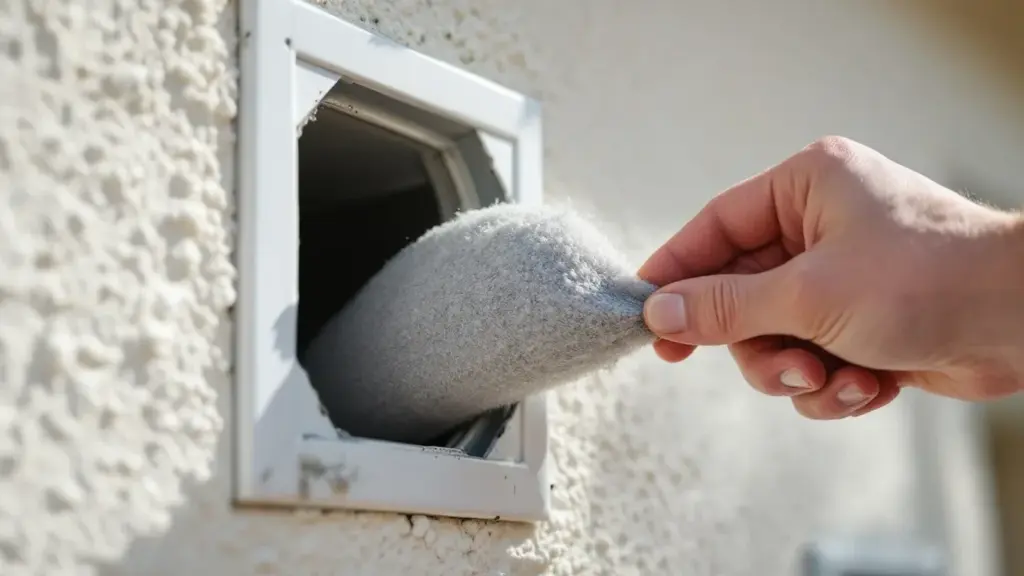
A quick trip outside your home while the dryer is running can tell you a lot about the health of your exhaust system. Locate the exterior hood cover on your outer wall or roofline. When the machine is operating, you should see the small louvers or the flap swinging wide open, releasing a steady, warm breeze that smells of laundry detergent.
If the exterior flap barely moves, flutters weakly, or remains completely shut while the machine is on, there is not enough air pressure reaching the end of the line. This usually means a thick plug of lint has formed somewhere along the duct run, or the vent hood itself is jammed shut with debris. Additionally, a stuck or damaged vent cover can allow outdoor pests, insects, or birds to enter the ductwork, compounding the blockage.
5. Large Amounts of Lint Accumulating Behind the Dryer
If you pull your dryer away from the wall and notice a layer of gray dust, lint bunnies, or loose debris coating the floor, the transition duct is likely compromised. The transition duct is the flexible hose that connects the back of the appliance to the rigid metal wall pipe.
When a severe blockage occurs further down the line, the backpressure increases inside the flexible duct. This pressure can cause small tears in foil or vinyl hoses, or pull the connection loose from the wall. When this happens, highly flammable lint escapes directly into the space behind your dryer, right next to the electrical outlet and gas connection. Finding lint on the floor or walls behind the machine is a sign that the structural integrity of your ventilation path is compromised.
How New Port Richey Humidity and Home Designs Accelerate Lint Buildup
In New Port Richey, our local environment plays a significant role in how quickly dryer vent lint buildup develops. Our high year-round relative humidity introduces moisture into the dryer intake air. When this damp air mixes with the fine fibers shed by your clothes, the lint becomes heavy, sticky, and clumped. Instead of blowing clean out of the vent hood, this wet debris acts like papier-mâché, sticking to the metal seams and elbows of your ductwork.
Many New Port Richey homeowners rely on expert breathe easy with professional dryer vent cleaning in New Port Richey for exactly this.
Furthermore, many homes in older established neighborhoods near Downtown New Port Richey or the Gulf harbors feature long, winding vent runs. It is common to find exhaust ducts that run horizontally underneath concrete slabs, rise up through interior walls, or route through hot attics before reaching a roof cap. Every single turn, elbow, and foot of vertical rise slows down the exhaust air velocity. This allows the heavy, damp lint to settle and accumulate much faster than it would in a short, straight, through-the-wall exhaust run.
What to Expect from a Professional Clothes Dryer Vent Cleaning
Addressing a clogged exhaust line requires specialized tools designed to navigate the twists and turns of home ductwork. When resolving these issues, a professional dryer duct cleaning service uses high-velocity air tools and flexible rotary brushes that travel the entire length of the vent line, from the back of the machine all the way to the exterior exit point.
This process breaks loose the stubborn, damp layers of packed lint without damaging the metal joints or flexible transitions. The technician will also check the air velocity using an anemometer to verify that the flow meets the manufacturer’s performance standards before the job is considered complete. Once cleaned, you will notice immediate improvements: drying times return to normal, the laundry room stays cooler, and you can enjoy peace of mind knowing the fire risk has been mitigated. To learn more about how often this maintenance should be performed in our region, see our article on how often to clean your dryer vent in Florida.
Frequently Asked Questions
Can I clean my dryer vent myself?
While homeowners can easily clean the lint trap and wipe out the transition hose, cleaning a long, hidden vent run that travels through walls or attics requires specialized rotary brushes and high-volume vacuum systems to ensure the entire line is cleared without causing damage or leaving blockages behind.
Why does my dryer vent get clogged so fast?
In our local coastal climate, high indoor humidity levels make lint damp and sticky, causing it to cling to the inner walls of the ductwork. Long vent runs with multiple bends or elbows also slow down airflow and accelerate debris accumulation.
Is a clogged dryer vent a real fire hazard?
Yes, dryer lint is highly flammable, and when it builds up inside the exhaust duct, it restricts airflow and causes the heating element or burner to run excessively hot. This combination of heat and combustible fuel is a leading cause of residential structure fires.
How can I tell if my roof dryer vent is clogged?
If your dryer vents through the roof, warning signs include damp clothes after a full cycle, a hot machine cabinet, and a lack of visible airflow or lint coming from the roof cap while the appliance is running.
Restoring Safety and Efficiency to Your Laundry Room
Ignoring the warning signs of dryer vent lint buildup can lead to unnecessary energy costs, premature appliance breakdowns, and serious household safety risks. If you have noticed your clothes taking too long to dry, a hot laundry room, or lint gathering behind your machine, it is time to take action. Ecovent Dryer Duct New Port Richey is ready to help restore your system to peak efficiency. Contact us today to schedule your comprehensive diagnostic inspection and restore peace of mind to your home.