
Air Duct Cleaning in New Port Richey: What Every Pet Owner Needs to Know
If you share your New Port Richey home with dogs, cats, or both, your HVAC system is working harder than you probably realize. Florida’s humidity keeps windows shut for most of the year, which means pet hair, dander, and the fine particulates that travel with them circulate through your ductwork day after day. This guide explains exactly what builds up inside residential ducts, why Pasco County’s climate makes the problem worse, and how professional duct cleaning can help your system run cleaner and your home feel fresher.
Why Pet Owners in New Port Richey Face a Unique Challenge
Florida’s Climate Keeps Contaminants Trapped Inside
Most of the continental United States gets a few months each year when residents throw open the windows and air out the house. In New Port Richey, that window is narrow. High humidity from roughly late spring through early fall makes natural ventilation impractical, and even in the cooler months many homeowners keep the AC running to manage moisture. The result is that your HVAC system becomes the primary ventilation pathway for the entire home, cycling the same air, and everything in it, repeatedly through the duct network.
Pet dander is microscopic. Individual particles are often smaller than five microns, light enough to stay airborne for extended periods before settling into return-air vents and duct lining. Once inside, they mix with humidity-driven dust accumulation and, in some cases, mold-friendly moisture that Florida’s climate can introduce into poorly sealed ductwork.
Shedding Seasons Add to the Load
Many dog and cat breeds experience heavier shedding twice a year, typically in spring and fall as daylight hours shift. In Florida, temperature swings are milder than up north, but many pets still cycle through noticeable shedding periods. During those weeks, the volume of loose hair entering your return vents can spike sharply. Filters catch a portion of it, but standard 1-inch fiberglass filters are not designed to capture fine dander particles, and even higher-MERV filters cannot trap what bypasses the filter housing through gaps in the return-air cabinet.
Multiple Pets Multiply the Effect
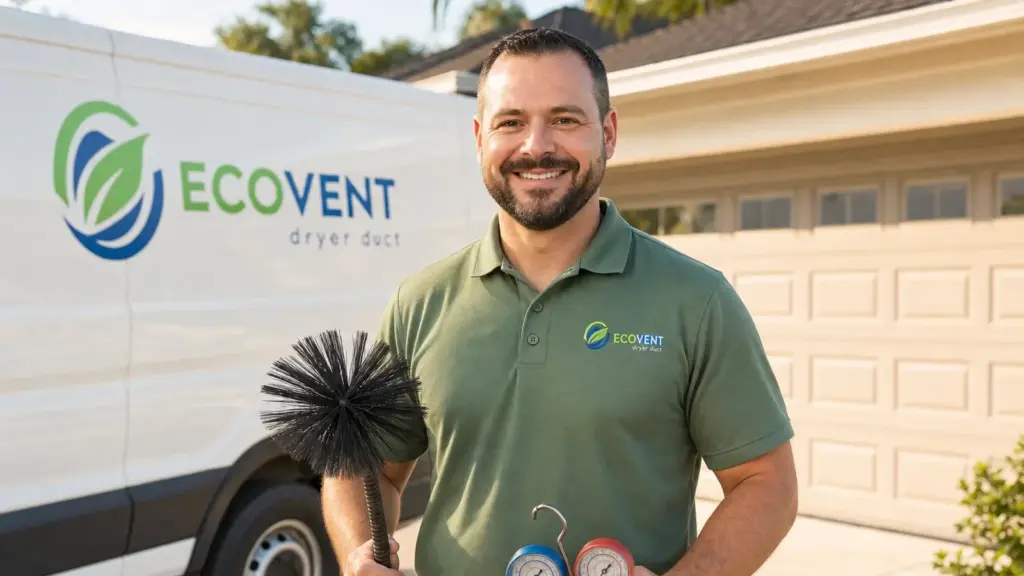
A single cat in a 1,500-square-foot home is a manageable source of airborne particulates. Two large dogs in the same space, both shedding actively, can overwhelm a filter change schedule that would otherwise be adequate. Ecovent Dryer Duct Solutions, based right here in New Port Richey, regularly inspects ductwork in homes with multiple pets and finds that the accumulation inside supply and return plenums is measurably heavier than in comparable pet-free homes of the same age.
What Actually Accumulates Inside Your Ducts
The Layers That Build Up Over Time
Residential ductwork is not a smooth, sealed pipe like a water line. Flexible duct sections have corrugated inner liners that create ridges where debris catches. Sheet metal trunks develop a thin film of dust that acts like Velcro for the next layer. Over months and years, the buildup in a pet household typically includes:
- Pet hair and shed fur, which can mat together and partially restrict airflow in flex duct bends
- Pet dander, a protein-rich flake of skin that is the primary source of animal-related indoor allergens
- Tracked-in soil and fine grit from outdoor access, especially in homes with large dogs
- Lint from nearby laundry areas that finds its way into return pathways
- Dust mite waste, which thrives in humid environments and feeds on dander
None of these materials are visible from the vent cover. You cannot assess duct condition by looking at the grille or even shining a flashlight a few inches in. A proper inspection requires camera access at multiple points in the system.
How Buildup Affects Your HVAC System
Beyond indoor air quality concerns, accumulated debris has a practical mechanical effect. When return-air pathways are partially restricted by matted pet hair, the air handler has to work harder to pull the volume of air the system was designed to move. That added strain shows up as longer run times, reduced cooling efficiency in a Florida summer, and in some cases premature wear on the blower motor. professional air duct cleaning addresses the debris at the source rather than just at the filter, which is the only layer most homeowners ever service.
Odors That Linger No Matter What You Clean
Pet odors are one of the most common complaints Ecovent Dryer Duct Solutions hears from New Port Richey homeowners. You can shampoo carpets, wash bedding weekly, and use air fresheners throughout the house, but if the duct lining has absorbed years of dander and pet-related particulates, conditioned air will pick up that odor signature every time the system cycles. Cleaning the duct interior removes the embedded source rather than masking it.
The Professional Duct Cleaning Process: What to Expect
Inspection Before Any Work Begins
A thorough job starts with a camera inspection so the technician can document actual conditions inside the ductwork before touching anything. This step matters for two reasons: it confirms whether cleaning is genuinely warranted, and it identifies any pre-existing issues like disconnected flex duct sections or gaps at boot connections that should be addressed before or during cleaning. Skipping the inspection and going straight to equipment setup is a shortcut that can leave problems unresolved.
Negative Pressure and Agitation
The industry standard process, as outlined by the National Air Duct Cleaners Association (NADCA), uses a powerful vacuum collection unit to place the duct system under negative pressure. Technicians then work through each supply and return branch using rotary brushes or compressed-air whips to agitate debris off the duct walls. The negative pressure ensures that dislodged material travels toward the collection unit rather than being pushed back into the living space. For pet households, this agitation step is especially important because matted hair requires mechanical disruption, not just suction.
Sanitizing and Sealing Options
After cleaning, some homeowners in New Port Richey opt for an EPA-registered duct sanitizer application, particularly if the inspection revealed visible biological growth or if odors were a primary concern. This is an optional step, not a required one, and a trustworthy technician will explain what was found and let you decide rather than automatically upselling every job. If the inspection also reveals leaks at duct connections, sealing those joints with mastic or foil tape is worth considering at the same visit, since a sealed system holds cleanliness longer and runs more efficiently.
Duct Cleaning Frequency: A Practical Guide for Pet Households
General guidance from NADCA suggests most homes benefit from duct cleaning every three to five years. That baseline assumes average occupancy and no unusual contaminant sources. Pet households are a recognized exception. A reasonable approach for Pasco County pet owners:
| Household Profile | Suggested Cleaning Interval | Key Trigger Signs |
|---|---|---|
| One small pet, no shedding breed | Every 3 to 4 years | Visible dust at supply vents, mild pet odor from registers |
| One medium or large dog or cat, moderate shedding | Every 2 to 3 years | Increased filter loading, odor when AC runs |
| Two or more pets, heavy shedding breeds | Every 1 to 2 years | Visible hair at return grilles, persistent odor, reduced airflow |
| Pets plus recent renovation or new construction | Within 6 months of project completion | Drywall dust combined with pet debris is a dense mix |
These intervals are starting points. If you notice your filters loading up noticeably faster than the manufacturer’s replacement schedule suggests, or if the air coming from your supply vents carries a musty or animal smell, those are practical signals to schedule an inspection sooner rather than later.
Signs Your Ducts Need Attention Sooner Than Scheduled
If you want it handled correctly the first time, consider professional breathe easy with professional dryer vent cleaning in New Port Richey.
What You Can See and Smell
You do not need a technician to notice the early warning signs. Check your return-air vent covers, the larger grilles that pull air back to the air handler. In a pet home, these accumulate hair and dust faster than supply vents. If the grille surface is visibly matted with fur, that is a reliable indicator of what is happening deeper inside. Similarly, if you notice a stale or pet-related smell specifically when the HVAC system kicks on and then it fades after a few minutes, the odor is likely originating inside the duct system.
Changes in System Performance
A system that used to cool the house within a predictable time on a hot New Port Richey afternoon but now seems to run longer for the same result may be dealing with airflow restriction. Check the filter first, but if a fresh filter does not restore normal performance within a cycle or two, the restriction may be inside the ductwork itself. Uneven temperatures between rooms, where one bedroom is noticeably warmer than the rest, can also point to a partially blocked branch run.
After a Major Shedding Season
Spring shedding season in Florida, typically March through May, is a practical trigger point for scheduling an inspection. If your pets went through a heavy shed and you noticed your filter needed replacement more frequently than usual during those months, booking a duct inspection in late spring or early summer gives you a clean system heading into the peak cooling season, when your HVAC will be running the most.
Complementary Steps Pet Owners Can Take Between Cleanings
Filter Selection and Change Frequency
The filter is your first line of defense. For pet households in New Port Richey, a pleated filter rated MERV 8 to MERV 11 captures a meaningful portion of dander and fine particles while still allowing adequate airflow for most residential systems. Filters rated MERV 13 and above capture even finer particles but can restrict airflow in systems not designed for that resistance level, so check your equipment specifications or ask a technician before upgrading significantly. In a pet home, check the filter every three to four weeks rather than waiting for the one-to-three month interval printed on the packaging.
Grooming and Vacuuming Habits
Regular grooming reduces the volume of loose hair that enters the air in the first place. Brushing dogs and cats outdoors when possible, and vacuuming with a unit that has a sealed filtration system, keeps more dander at floor level where it can be captured rather than recirculated. These habits do not eliminate the need for periodic duct cleaning, but they extend the interval between professional services.
Keep Return Vents Clear
Return-air vents need unobstructed airflow to work properly. Furniture pushed against a return grille, or a rug laid over a floor return, forces the system to work harder and concentrates debris at that point in the duct. Check that all return vents in your home have at least several inches of clear space around them.
Choosing a Duct Cleaner in Pasco County: What Matters
Equipment and Process Over Price
The most meaningful differentiator between duct cleaning providers is the equipment they use and whether they follow a documented process. A truck-mounted or trailer-mounted vacuum collection system provides significantly more suction than portable units, which matters when you are trying to remove years of compacted debris from a Florida home’s ductwork. Ask whether the technician will use camera inspection before and after the job, and whether the process includes mechanical agitation or just suction alone.
Transparent Scope of Work
A reputable duct cleaner in Pasco County will tell you what they found during inspection, show you photos if possible, and explain what the cleaning will and will not address. If a technician recommends additional services, they should be able to point to a specific finding that justifies the recommendation. Ecovent Dryer Duct Solutions approaches every job this way, which is part of why the business holds a 5-star rating across 31 Google reviews from New Port Richey area homeowners.
Verify the Full Scope Includes All Components
A complete residential duct cleaning covers supply trunks and branch runs, return ducts, the air handler cabinet interior (including the evaporator coil area and drain pan inspection), supply and return boot connections, and all grilles and registers. Cleaning only the visible sections of ductwork and skipping the air handler cabinet leaves a significant portion of the system untouched. Confirm the scope in writing before work begins.
Frequently Asked Questions
How long does a residential duct cleaning take for a typical New Port Richey home?
Most single-story homes in the 1,500 to 2,500 square foot range take between two and four hours for a thorough cleaning. Larger homes, two-story layouts, or homes with extensive duct runs may take longer. The inspection phase adds time but is worth it for the documentation it provides.
Will duct cleaning disturb the pet dander and make air quality temporarily worse?
The negative pressure process is specifically designed to prevent this. Because the vacuum collection unit holds the system below ambient pressure throughout the job, dislodged debris moves toward the collection point rather than back into the room. A properly set up job should not produce visible dust in the living space during cleaning.
Can duct cleaning help with pet odors, or is it just a cosmetic improvement?
It depends on the source. If odors are originating from debris embedded in the duct lining, cleaning removes that source and the smell typically diminishes noticeably. If the odor source is in carpeting, upholstery, or subfloor materials, duct cleaning alone will not fully resolve it. An honest technician will help you set realistic expectations after the inspection.
Do I need to do anything to prepare my home before the technician arrives?
Clear access to all supply and return vents by moving furniture if needed, and make sure the technician can reach the air handler. If you have pets, securing them in a comfortable area away from the work zone makes the job easier and keeps your animals calm during the process.
Is dryer vent cleaning something I should schedule at the same time?
Many New Port Richey homeowners find it convenient to combine services. Dryer vent cleaning is a separate process from air duct cleaning, but scheduling both on the same visit saves time and ensures your home’s two primary ventilation systems are both serviced. Ecovent Dryer Duct Solutions offers both services and can assess your dryer vent during the same appointment.
Conclusion
Pet ownership and Florida’s climate are a combination that puts real demands on your home’s duct system, and New Port Richey homeowners who stay ahead of that buildup end up with a more efficient HVAC system, fresher-smelling rooms, and fewer filter surprises. The key is knowing what to watch for and working with a local provider who inspects before cleaning and documents what they find. Ready to see what is actually inside your ductwork? schedule your air duct cleaning in New Port Richey today and get a camera inspection before any work begins.