
How Can You Tell If Your HVAC System Needs Cleaning?
How do you know when your home ventilation system is operating under extreme stress? Many homeowners in New Port Richey, Florida, do not realize their central heating and cooling systems are struggling until airflow drops or monthly utility bills rise. Dusty ductwork acts like a clogged throat, forcing your air handler to consume more energy to circulate conditioned air. Recognizing these red flags early helps prevent mechanical wear and tear, improves indoor air quality, and ensures your system operates at peak efficiency.
Airway Restriction Checklist: Visual and Airflow Signs
Dust and debris do not remain hidden forever. Over time, physical accumulations of particulate matter show up on your registers, walls, and in the air you breathe. Check your home for these direct visual and physical indicators of restricted airflow.
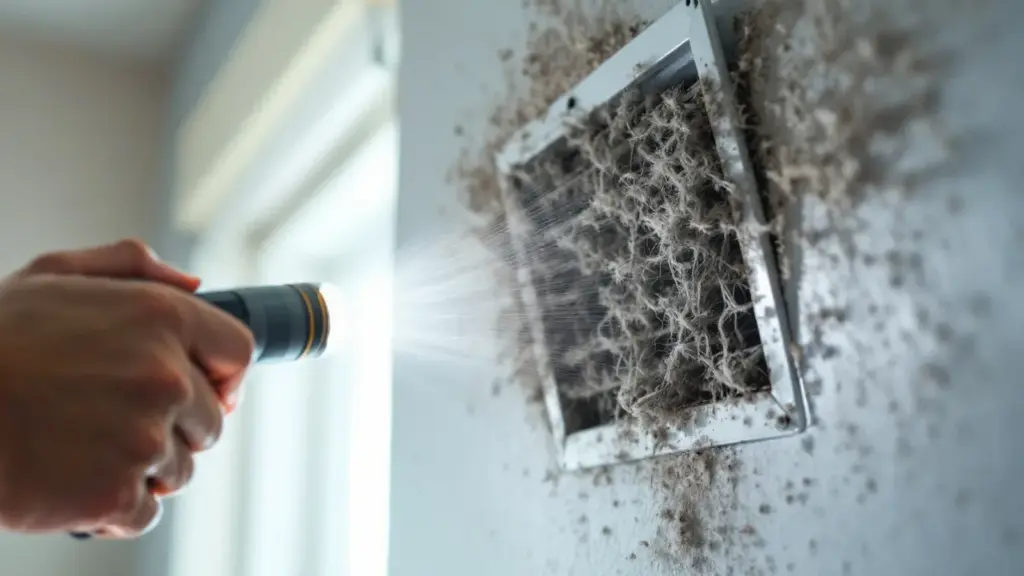
- Examine the metal slats on your supply registers. If you notice dark, fuzzy borders of dust clinging to the grilles, it indicates that particulate matter is constantly circulating through the system and clinging to static-charged metal surfaces.
- Assess the strength of the air coming out of your vents. Hold a light piece of paper or ribbon near the register while the system is running; if the paper barely moves, your system is likely fighting against blocked internal pathways or a heavily clogged air filter.
- Inspect the surface of your return vents. A heavy, grey blanket of lint on the return grille means the system is choking on return air, which starves the blower motor and creates high static pressure.
- Perform a white-glove test on flat furniture surfaces. If a thick layer of fine, grey dust resettles on your tabletops within forty-eight hours of a thorough cleaning, your ducts are likely acting as a dust reservoir, redistributing particles every time the fan cycles on.
- Look inside the vent openings with a flashlight. Remove a register cover and peer inside; if you see thick accumulations of pet hair, construction debris, or dark fibers lining the metal or fiberglass walls, a professional cleaning is overdue.
System Performance Checklist: HVAC Strain and Efficiency Issues
Your heating and cooling equipment reacts directly to restricted airflow. When the ducts are restricted, the entire system must run longer and work harder to meet the temperature settings on your thermostat.
- Track the duration of your heating and cooling cycles. An overworked system will cycle on and off frequently, a process known as short-cycling, or run continuously without ever reaching the desired temperature set on your thermostat.
- Listen for unusual noises when the blower fan starts up. Whistling, rattling, or high-pitched humming sounds often point to restricted airflow through dirty grilles, loose dampers, or ducts narrowed by heavy debris.
- Monitor your monthly energy consumption patterns. If your electricity usage rises steadily compared to the same month in previous years, but your household habits have not changed, an airflow restriction is a highly likely culprit.
- Check for temperature variations between rooms. When dust and debris block branch runs, certain bedrooms or back offices will feel noticeably warmer or cooler than the rest of the house.
- Inspect the blower motor compartment for physical dust. Open the cabinet doors of your indoor air handler; if the fan blades, motor housing, and electrical components are coated in a layer of grime, the entire system is operating under thermal stress.
If you want it handled correctly the first time, consider professional dryer vent cleaning vs air duct cleaning in New Port Richey.
Environmental and Air Quality Checklist: Physical Indicators
The air cycling through your home directly impacts the overall indoor environment. Paying attention to subtle changes in the air and surfaces around your living space can alert you to hidden ductwork issues.
- Sniff the air near your supply vents when the system first kicks on. A persistent musty or dusty odor that lingers in specific rooms often points to accumulation inside the ductwork, where humidity can interact with organic dust.
- Check your air filters every thirty days. If your pleated filters are completely black or choked with grey fibers after only a couple of weeks, it means the return ducts are heavily loaded and continuously overloading the filter medium.
- Watch for localized humidity spikes around your registers. Condensation forming on metal vent covers can indicate that cold air is struggling to escape, creating a localized damp zone that attracts dirt.
- Observe pet hair accumulation in unusual places. If you find dog or cat hair clinging to high ceiling corners or high-level wall vents, your HVAC fan is forcefully pulling pet dander through the system and blowing it back out.
- Evaluate the indoor air after a home renovation project. If sheetrock dust, sawdust, or flooring fibers were not properly sealed off during construction, these fine particles easily settle into your return system, waiting to recirculate.
New Port Richey-Specific Considerations
The subtropical climate, coastal location, and housing patterns in New Port Richey, Florida, place unique demands on residential ventilation systems. Our local conditions accelerate dust accumulation and system wear in ways that northern or drier climates do not experience.
- Account for prolonged summer cooling seasons. In West Pasco County, air conditioners often run for ten to twelve hours a day from April through October, meaning local ductwork processes millions of cubic feet of air annually and accumulates dust much faster than average.
- Consider the impact of high coastal humidity. When humid outdoor air slips indoors through open doors or minor structural gaps, it mixes with the dust inside your ducts, causing particles to stick to the duct walls and form a stubborn, caked-on layer that cannot be removed by simple vacuuming.
- Evaluate older home construction styles. Many classic Florida ranch homes in established New Port Richey neighborhoods feature ductwork run through hot, uninsulated attic spaces, where extreme heat can cause duct joints to expand, pull in attic insulation dust, and distribute it throughout your living areas.
- Address sand and coastal soil intrusion. Our proximity to the Gulf of Mexico means fine beach sand and light coastal soils are regularly tracked indoors, dried out, and swept up into the return vents, creating heavy, abrasive sediment inside horizontal duct runs.
- Minimize the effects of sealed-up indoor spaces. Because high humidity keeps local windows closed for the majority of the year, homes rely entirely on recirculating air, making professional duct cleaning new port richey essential to prevent the same dust and dander from cycling endlessly through the home.
Many New Port Richey homeowners rely on expert dryer vent cleaning vs air duct cleaning in New Port Richey for exactly this.
Frequently Asked Questions
How can I tell if my air ducts are dirty without opening them?
You can check for visual signs on your home surfaces, such as rapid dust buildup on furniture immediately after cleaning or dark, smudgy lines around your wall and ceiling vents. Additionally, if you notice weak airflow from your registers or hear whistling sounds from your vents when the system runs, it strongly indicates restricted airflow within the ductwork.
Can dirty ducts make my cooling system break down?
Yes, severe dust buildup acts as an insulating layer on your system’s indoor evaporator coil and restricts airflow across the blower motor. This restriction forces the system to run hotter and cycle longer, which can eventually cause the compressor to fail or lead to a frozen evaporator coil, resulting in expensive system repairs.
Is it normal to have some dust inside the vents?
A very light coating of fine dust on the metal walls of your registers is normal over years of operation. However, thick layers of debris, visible clumps of pet dander, construction residue, or any signs of moisture and caked-on grime require professional attention to restore proper system performance and indoor air quality.
Takeaway
When your ventilation system exhibits signs of restriction, ignoring the warnings can shorten the lifespan of your cooling equipment and raise your utility costs. If you notice restricted airflow, dirty registers, or rising energy bills, explore our comprehensive guide on the duct cleaning cost factors to understand how maintaining clean air pathways protects your home investment. For specialized ventilation care, consider booking a professional dryer vent cleaning or duct inspection with Ecovent Dryer Duct New Port Richey to keep your home running efficiently.